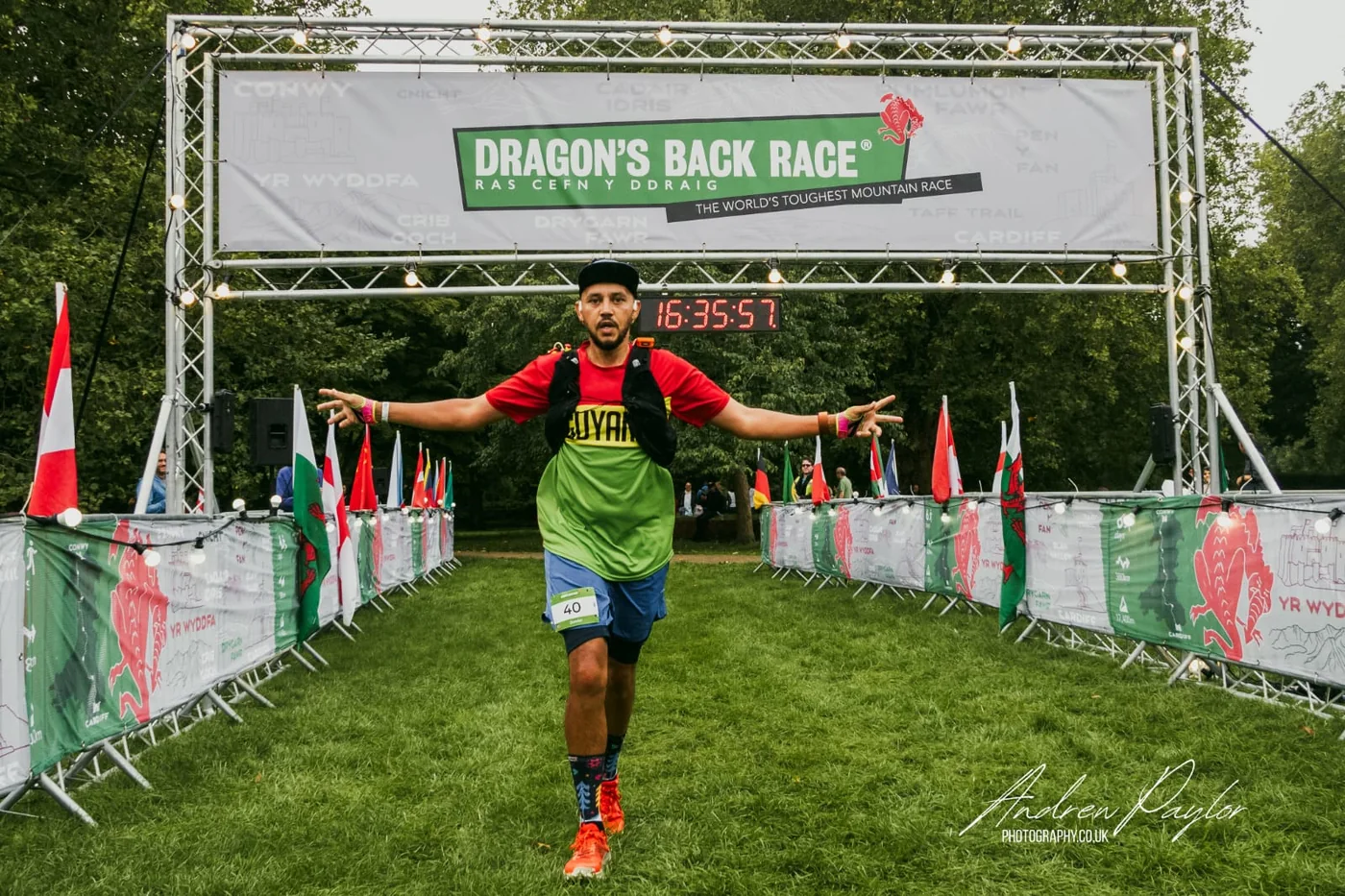

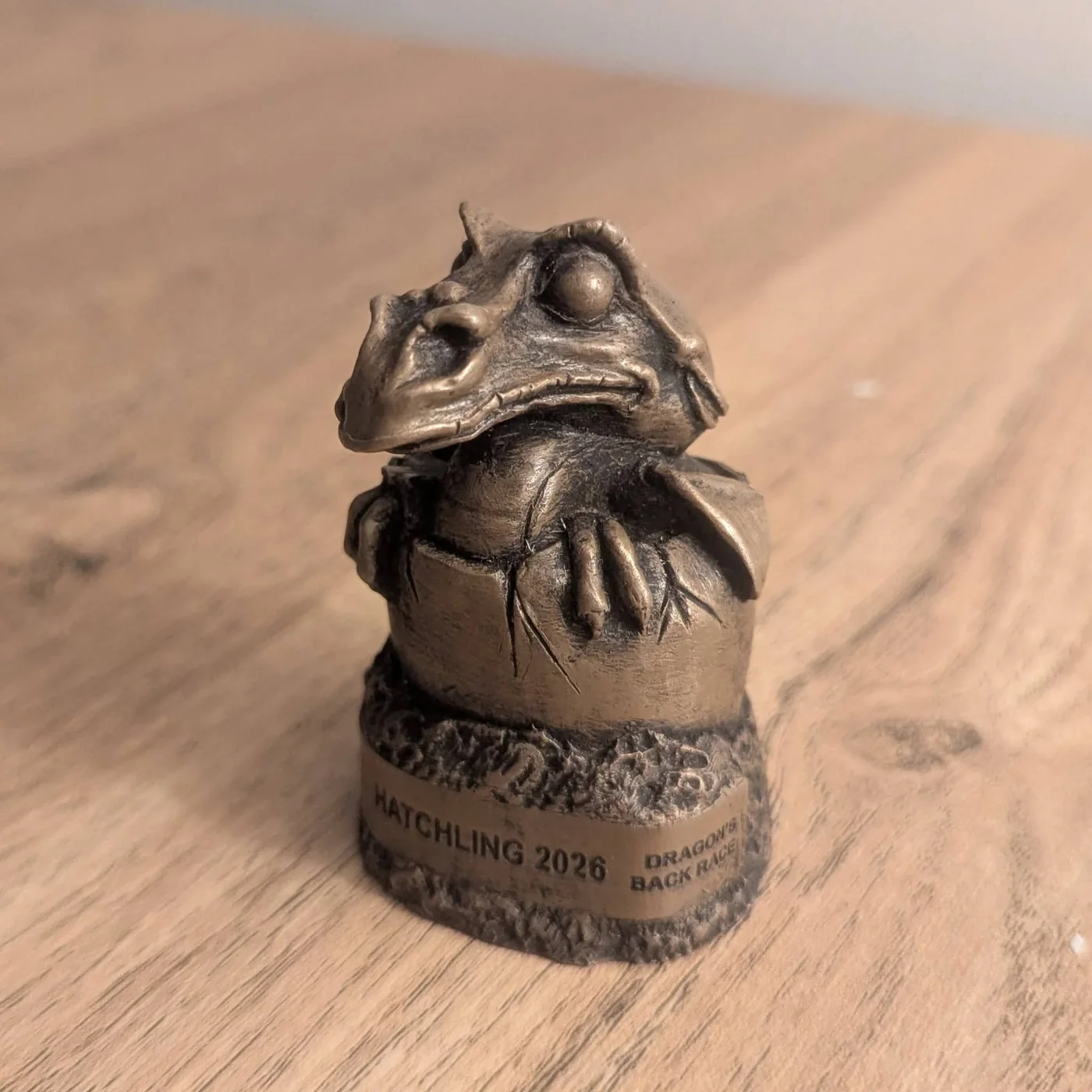
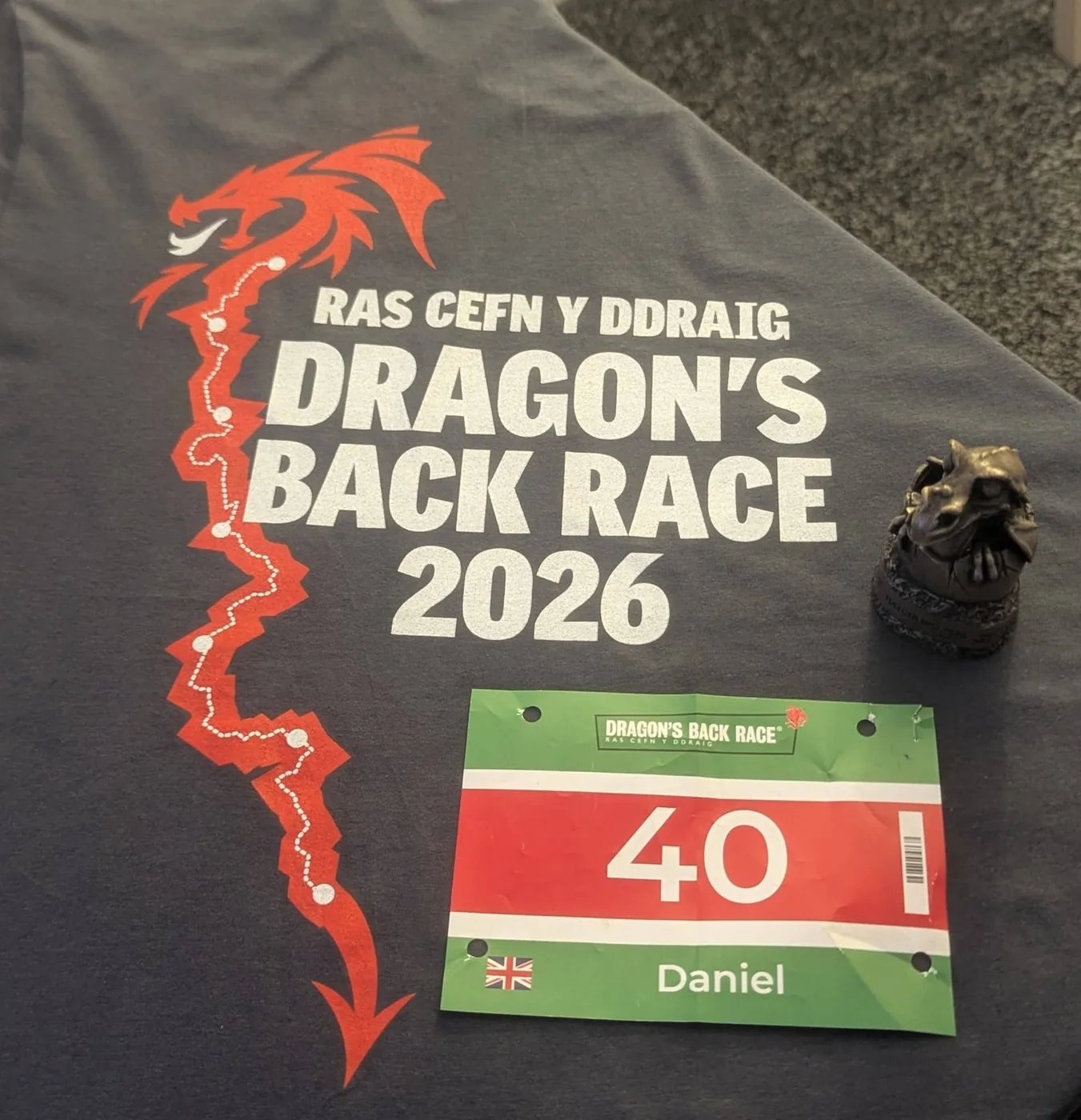
Daniel Dublin covered 112.22 miles and 27,921ft across Wales in six days, eighth in the Hatchling, after an Achilles problem forced him to change the plan.
A personal trainer and running coach from Southend has finished the Dragon’s Back Race in 52 hours, 13 minutes, covering 112.22 miles and climbing 27,921ft across Wales in six days. Daniel Dublin entered the full race, then changed to the shorter Hatchling course because of an Achilles problem, and says the part he is proudest of is not the distance.
“Changing from the full Dragon’s Back to the Hatchling wasn’t giving up,” he told us. “It was changing the plan so I could still have the experience and see what I could do.”
The race ran from Monday 7 to Saturday 12 September, from Conwy Castle in the north to Cardiff Castle in the south, down what the organisers call the mountainous spine of Wales (Dragon’s Back Race). The Hatchling is the newer option on the same six days: runners take part of each day’s route rather than all of it, with daily sections of roughly 19km to 40km, and finish at the same place.
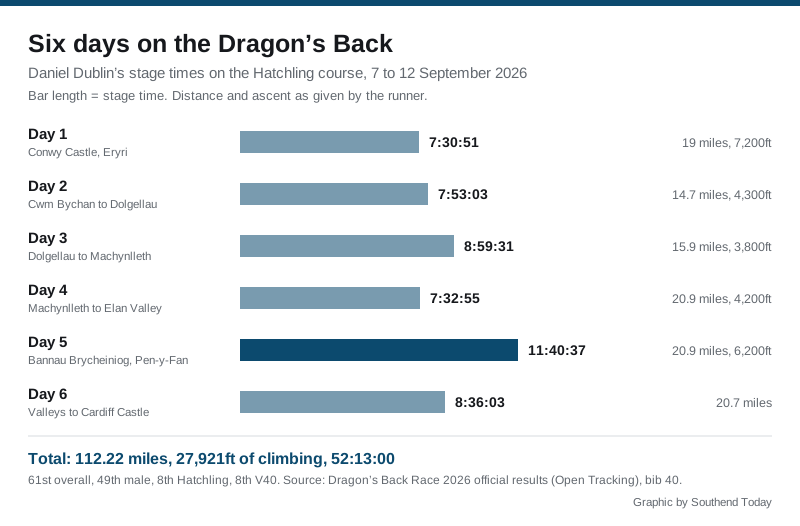
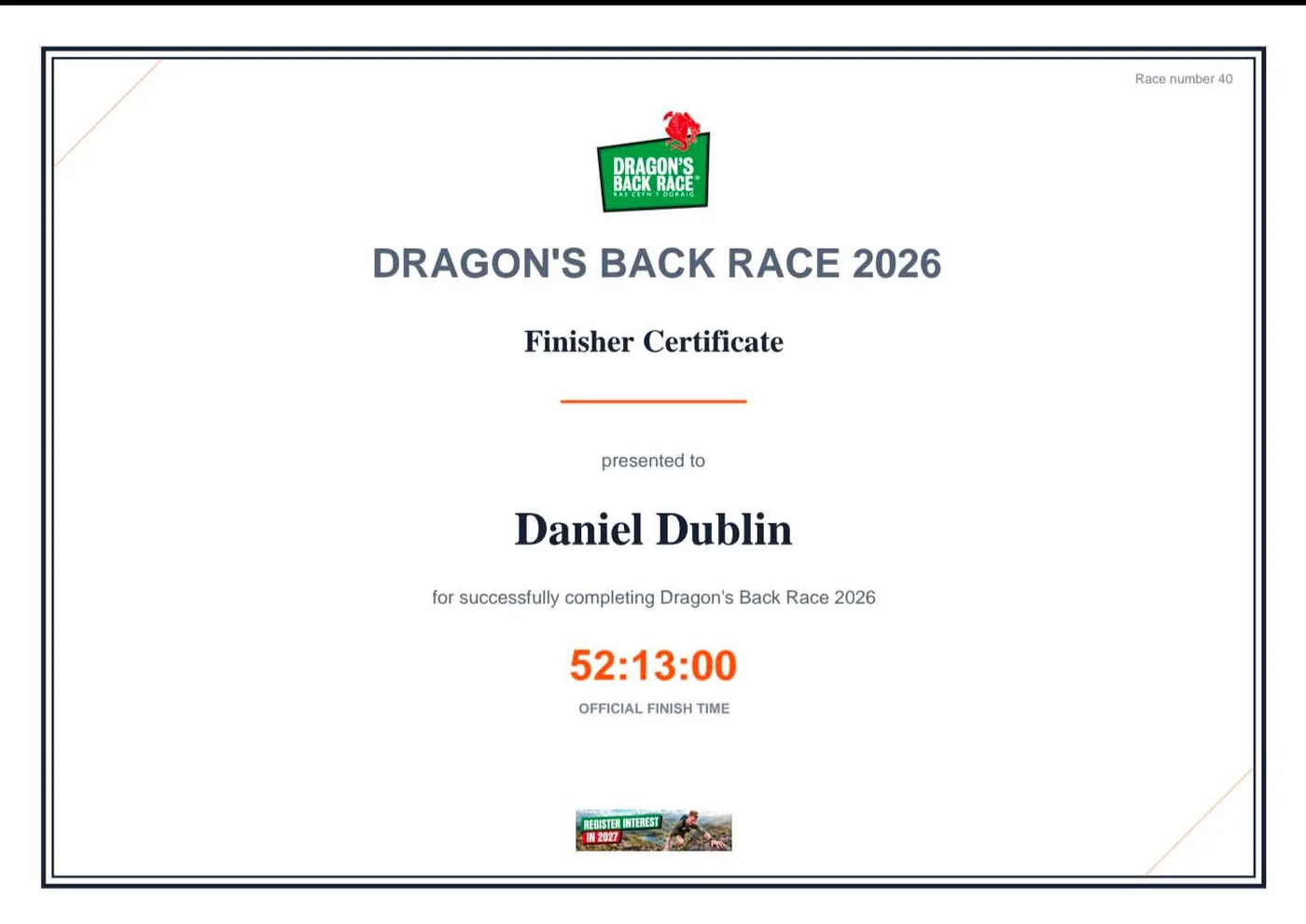
The official results confirm every figure Mr Dublin gave us. Running as number 40, he is recorded as 61st overall, 49th male, 8th in the Hatchling and 8th in the V40 class, with six stage times adding up to 52:13:00 (Dragon’s Back Race 2026 results, Open Tracking). Sixty-three Hatchling runners appear in those results, and all of them reached Cardiff.
“Operation: Earn the Start Line”
The Achilles trouble was not something that happened in Wales. Mr Dublin says he had a longstanding problem with his left Achilles and calf, which had been assessed without a rupture being identified, and that the build-up made him rethink what he was doing.
“In the build-up to Dragon’s Back, I had to accept that I couldn’t train in exactly the way I originally wanted to,” he said. “Rather than chasing mileage, I started focusing much more on time on my feet. I reduced the amount of running and concentrated on getting my body used to spending long periods moving without continually putting more stress through the Achilles.
“That was difficult mentally because, as an ultra runner, there is always that voice telling you that you should be doing more. But I had to change my mindset. There was no point doing huge training miles if I couldn’t actually get to Conwy.”
The goal shrank to four words, which he wrote in capitals when he first contacted us: GET TO THE START LINE. He called it “Operation: Earn the Start Line”.
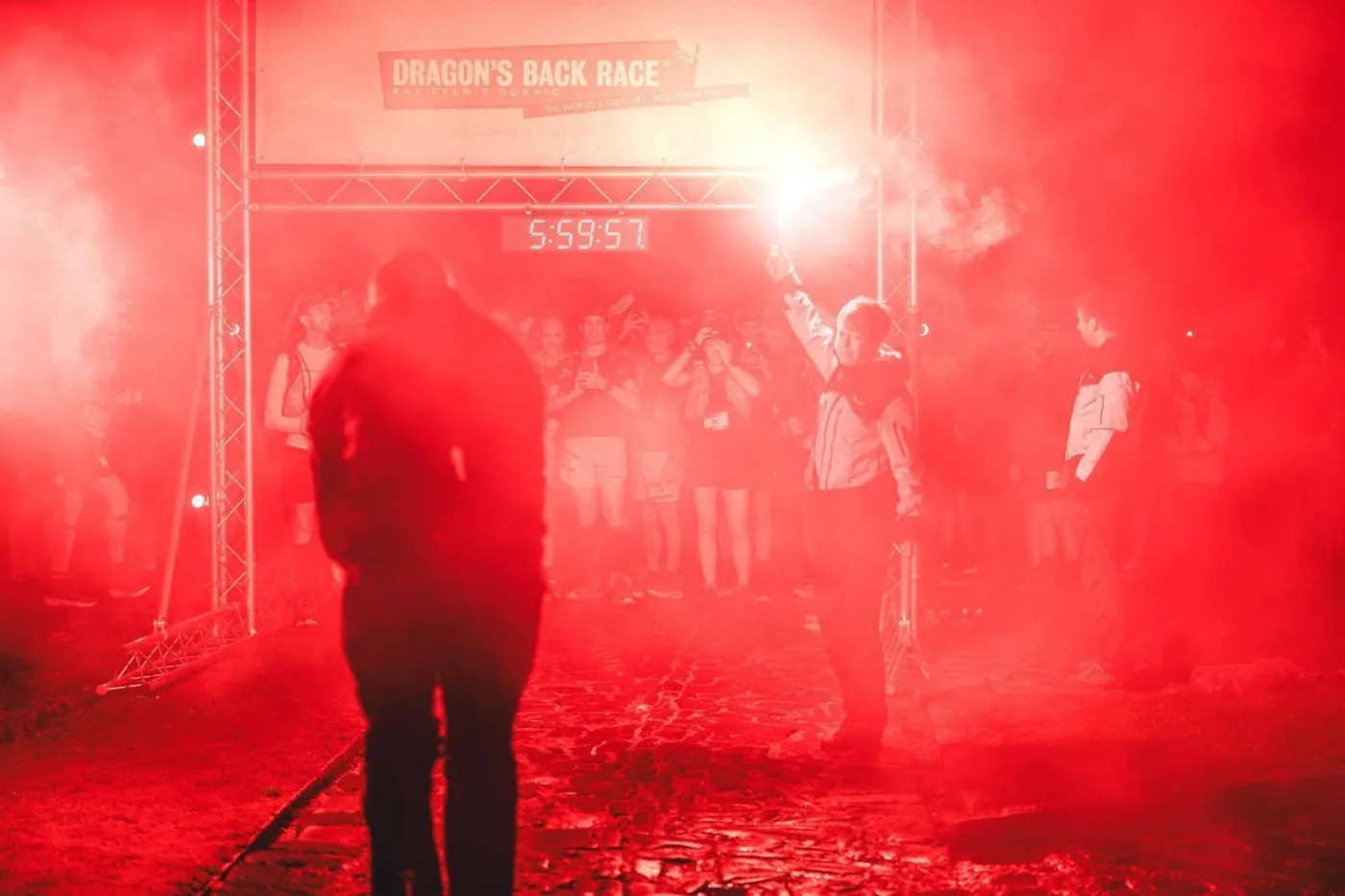
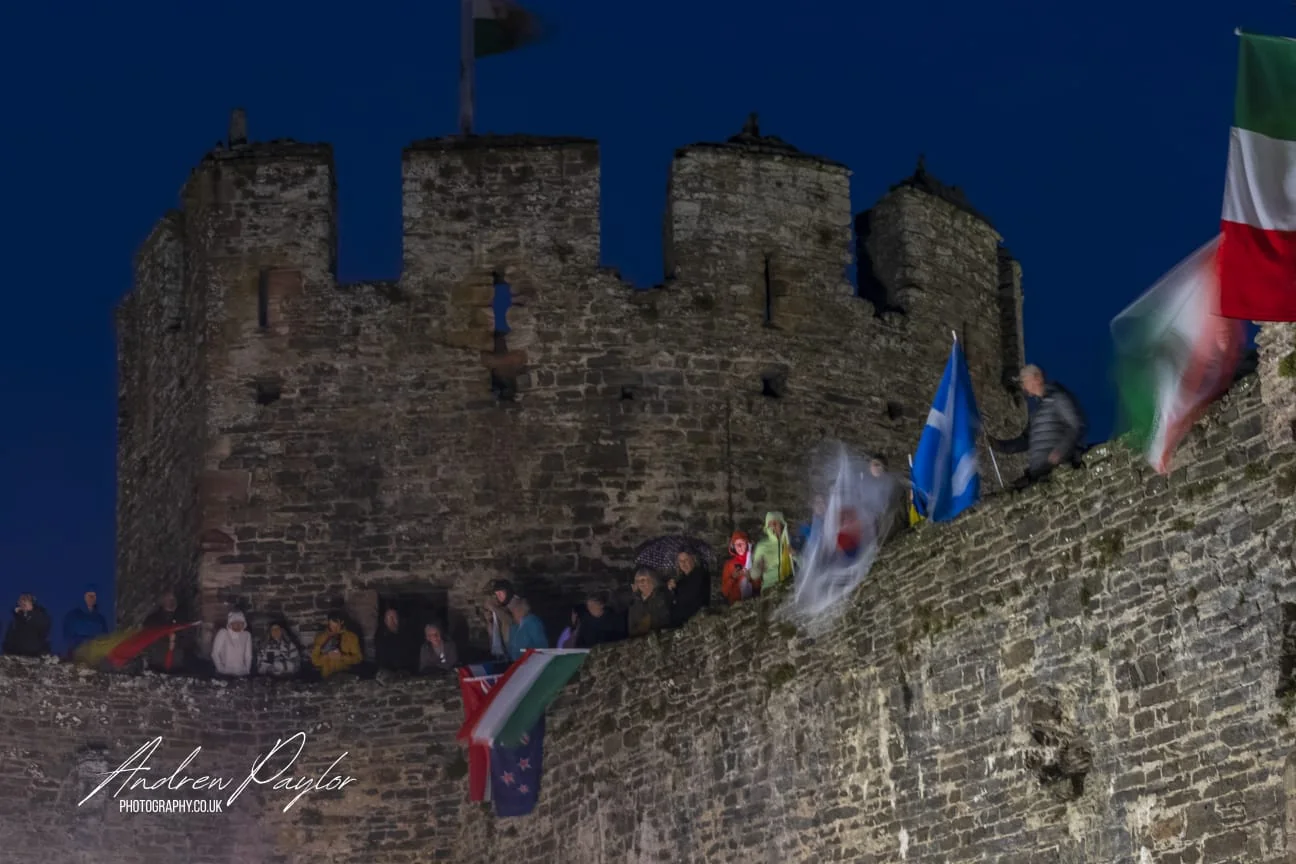
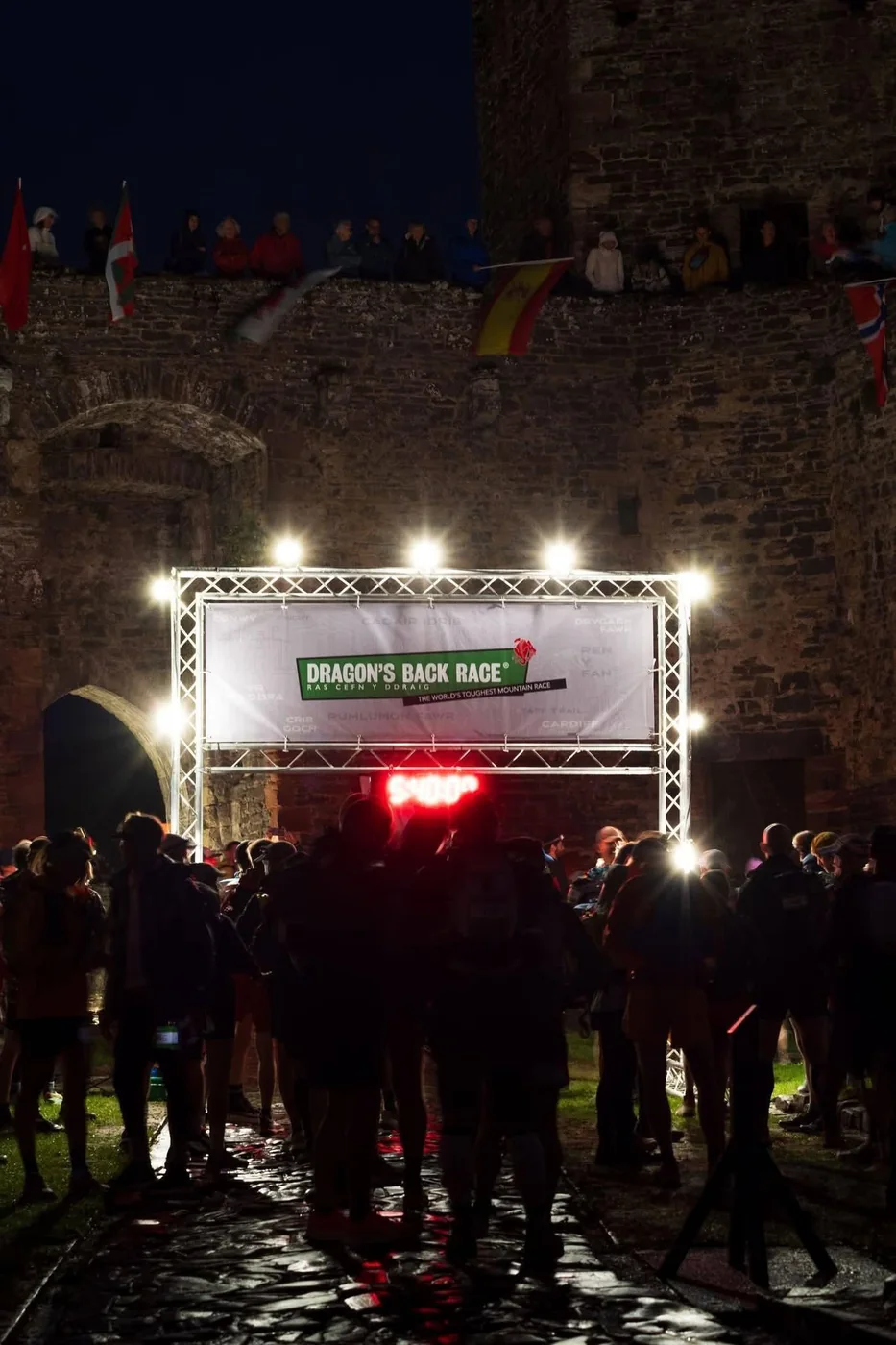
“Starting at Conwy Castle was incredible,” he said. “There were red flares going off and, after everything I’d been through to get there, that was a huge moment for me.”
Six days, six different problems
Day one was about 19 miles and roughly 7,200ft of climbing, in 7:30:51. “I was already aware of my Achilles and was monitoring it, while my feet were starting to develop hot spots,” he said. “But I got through the first day, and just standing at that start line and then completing the first stage felt like a huge achievement.”
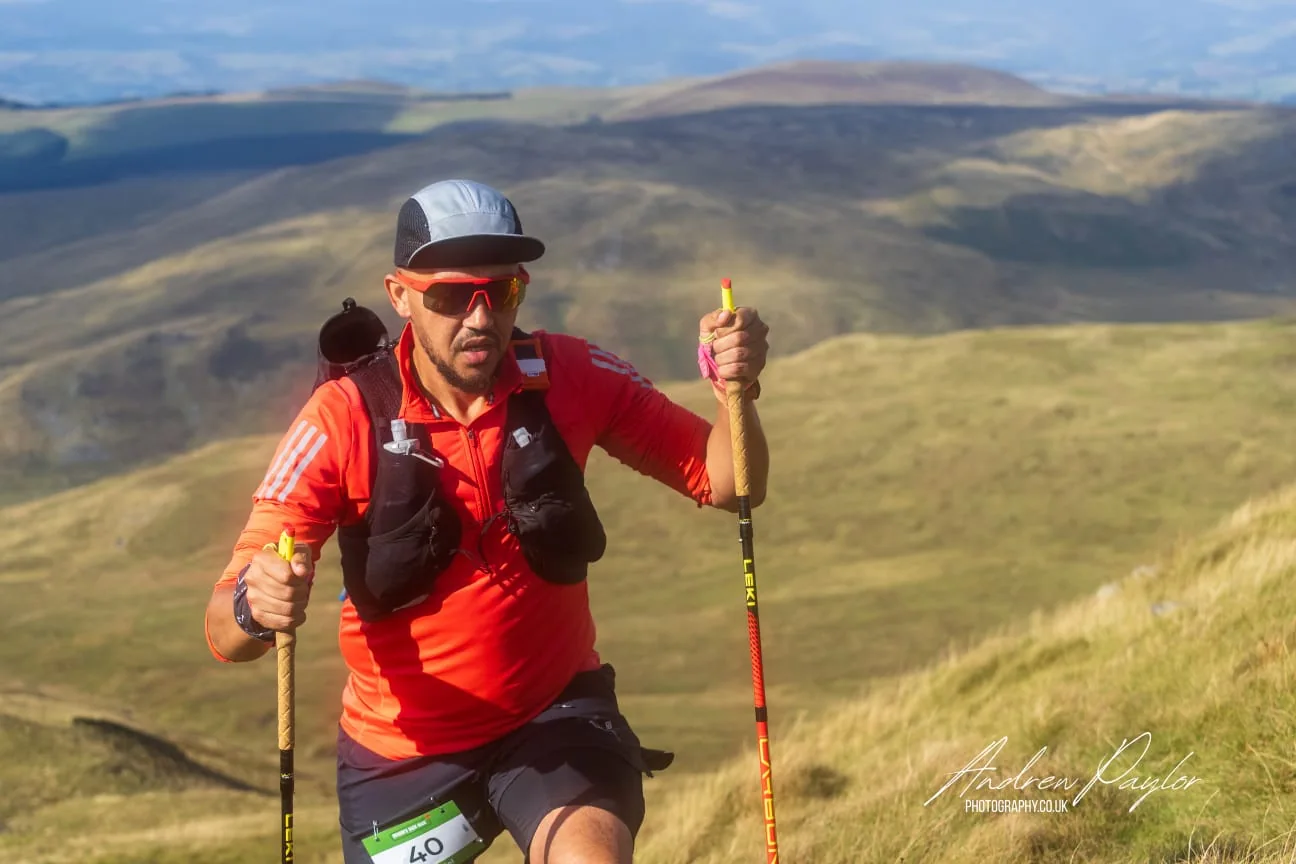
Day two, 14.7 miles and about 4,300ft in 7:53:03, brought rain, wind and bog, and one descent he could not run at all.
“There was also a particular section where the terrain became so steep and awkward that it was physically impossible to sensibly descend it standing up,” he said. “You literally had to sit down and lower yourself down the mountain, sliding yourself down carefully because of the gradient and terrain. That was one of those moments where you realise you’re not just out for a run. You’re dealing with whatever the mountain gives you.”
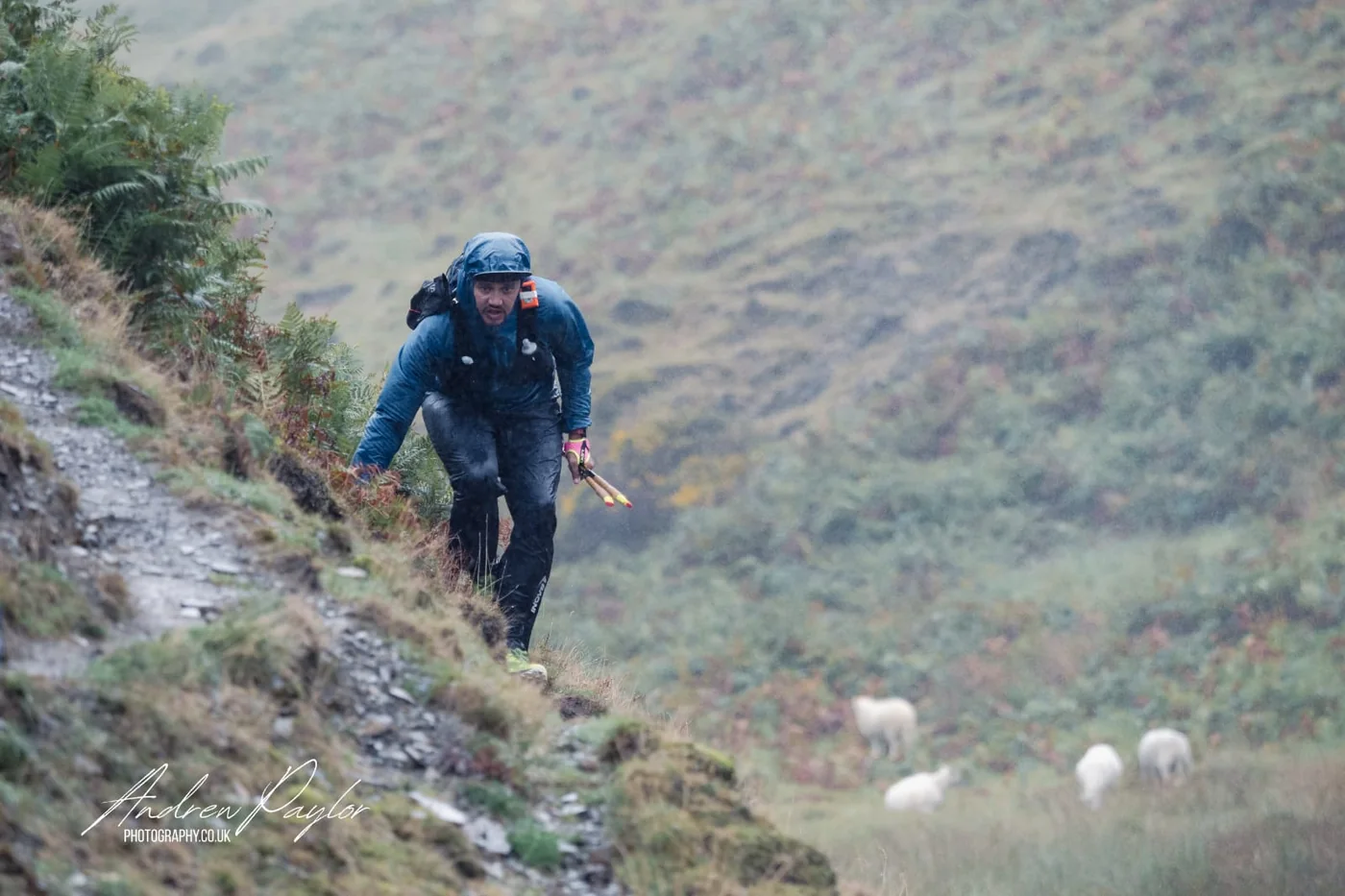
Day three, 15.9 miles and about 3,800ft in 8:59:31, was the day he felt strongest, and the day he waded a river he did not need to wade.
“I’d been following another runner who was a few metres ahead of me, and when we came towards the river my GPS was basically telling me to go straight across,” he said. “What I completely missed was that there was actually a bridge crossing nearby. So rather than following the bridge, I went straight through the river. There were stepping stones across it, and luckily the weather was quite warm, so it was actually quite refreshing to go through the water. At the time I just thought, ‘Well, I suppose this is what we’re doing.’”
The medics, the tape and day five
Day four, 20.9 miles and roughly 4,200ft in 7:32:55, was where the Achilles gave way to the point that he went to the race medics.
“They used KT Tape to support the Achilles, taping around the Achilles and through the midfoot to help secure and support the area,” he said. “They also dealt with my feet. I’d developed hot spots and blisters, particularly on the outside of both big toes, and I was also getting a hot spot developing around the back of the Achilles area. That was taped as a precaution as well.
“The medics were brilliant. They helped me manage the problems and get myself into a position where I could continue. It wasn’t about pretending nothing was wrong. It was about managing the problems, listening to my body and making sensible decisions.”
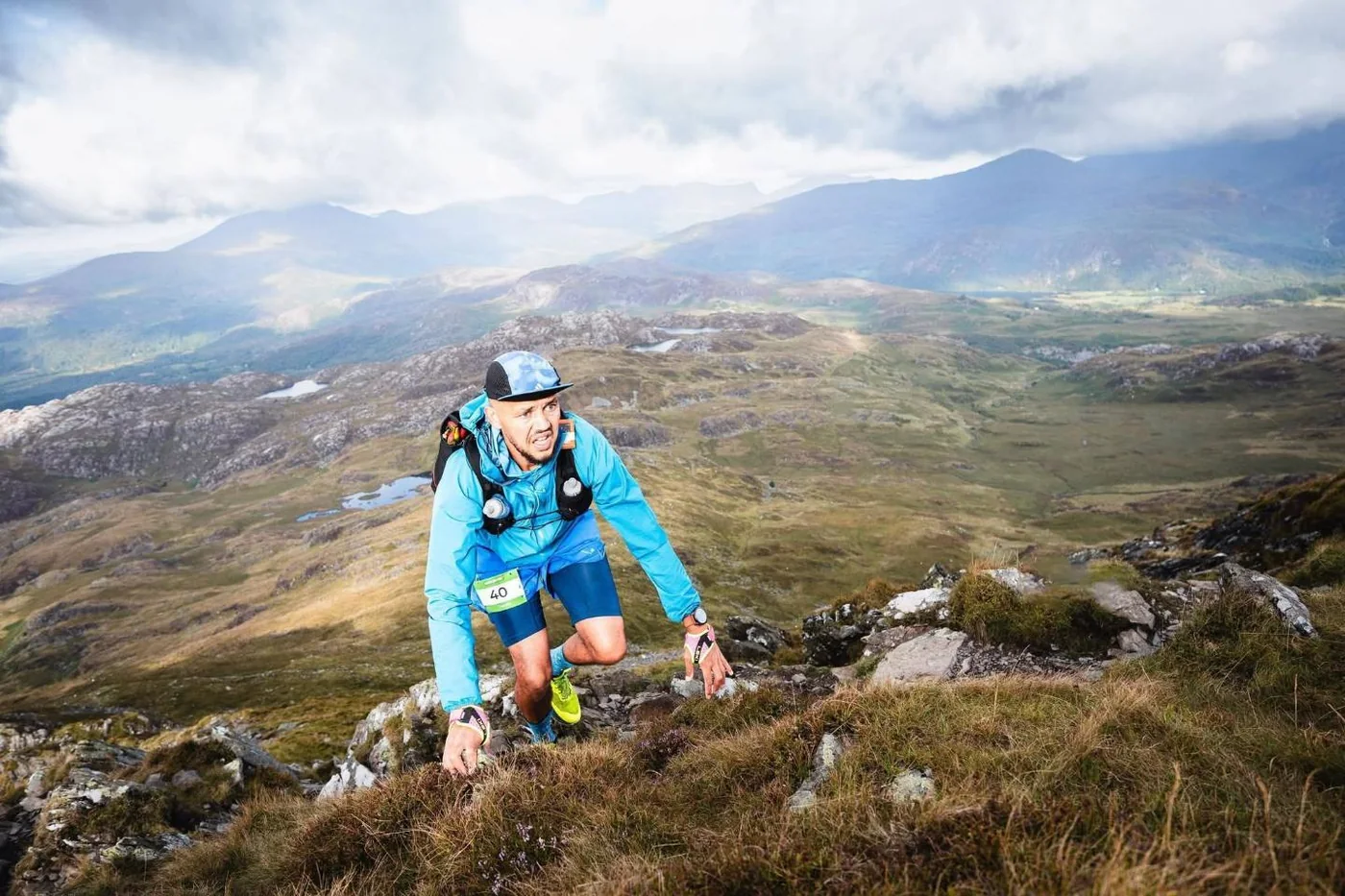
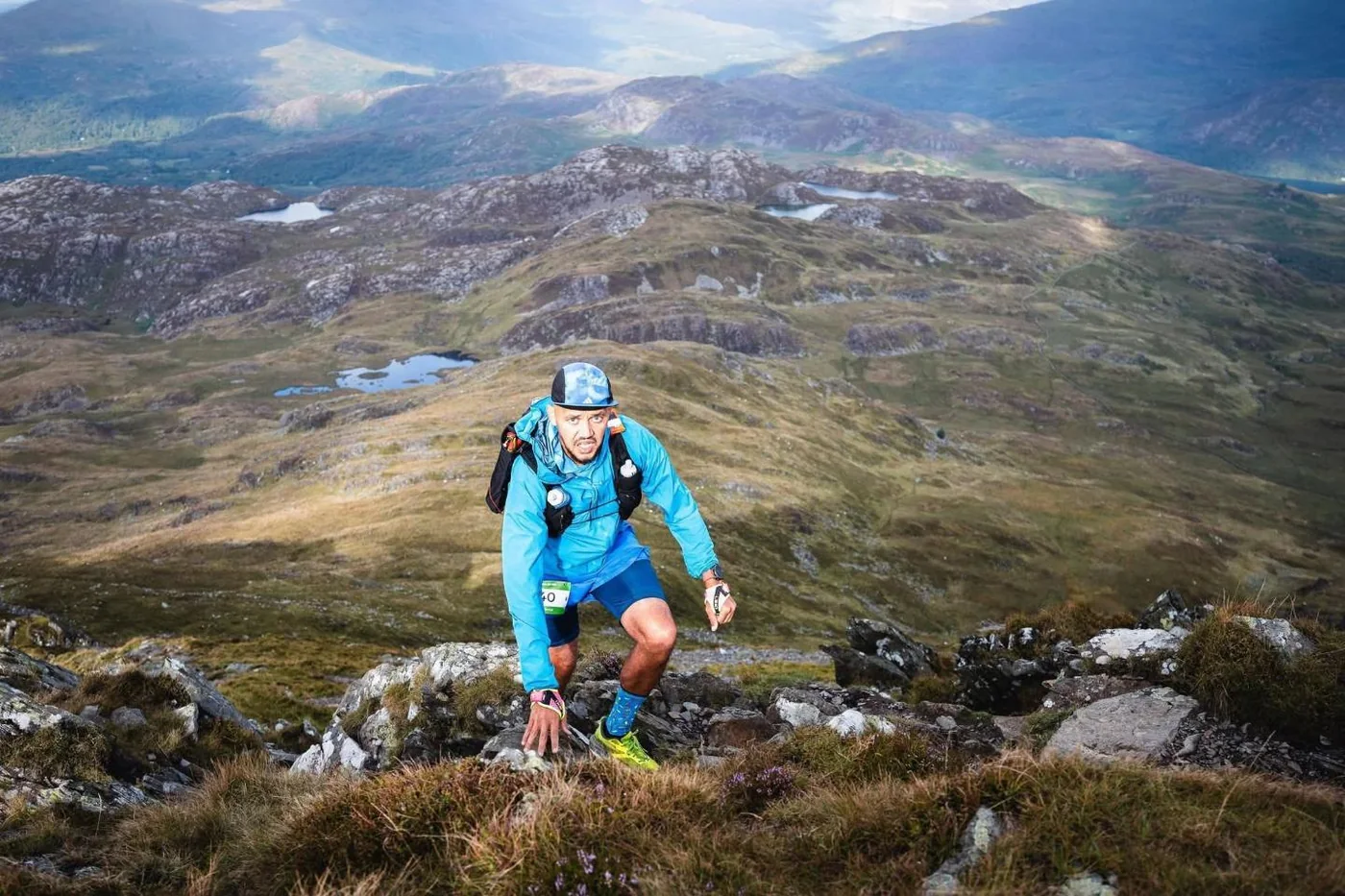
Day five was 20.9 miles and about 6,200ft, took 11:40:37, and is the one he says came closest to finishing him. It crossed the Bannau Brycheiniog towards Pen-y-Fan. It also produced the best meal of his life, from a burger van.
“It was a rare opportunity to have some proper food, and at that moment that burger genuinely felt like it was the best burger I’d ever had in my life,” he said. “That simple combination gave me a second wind. I’d also been keeping on top of my electrolytes and nutrition throughout the event, but having some real food at that point made a huge difference mentally as well as physically.
“Pen-y-Fan nearly finished me. By that stage I was absolutely exhausted and the combination of the fatigue, the terrain, the climbing and everything I was already dealing with made it an incredibly tough section. But somehow I got through it.”
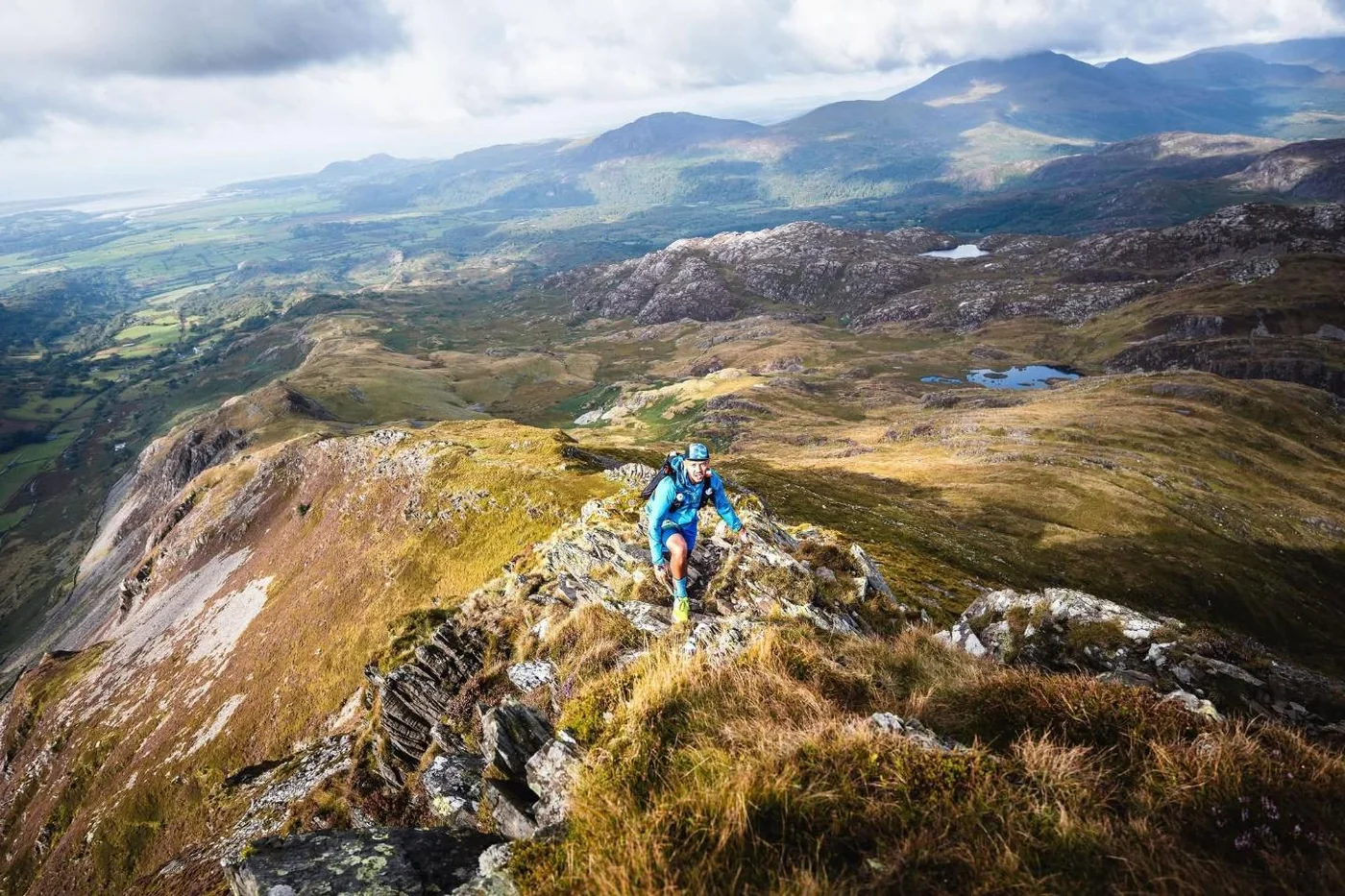
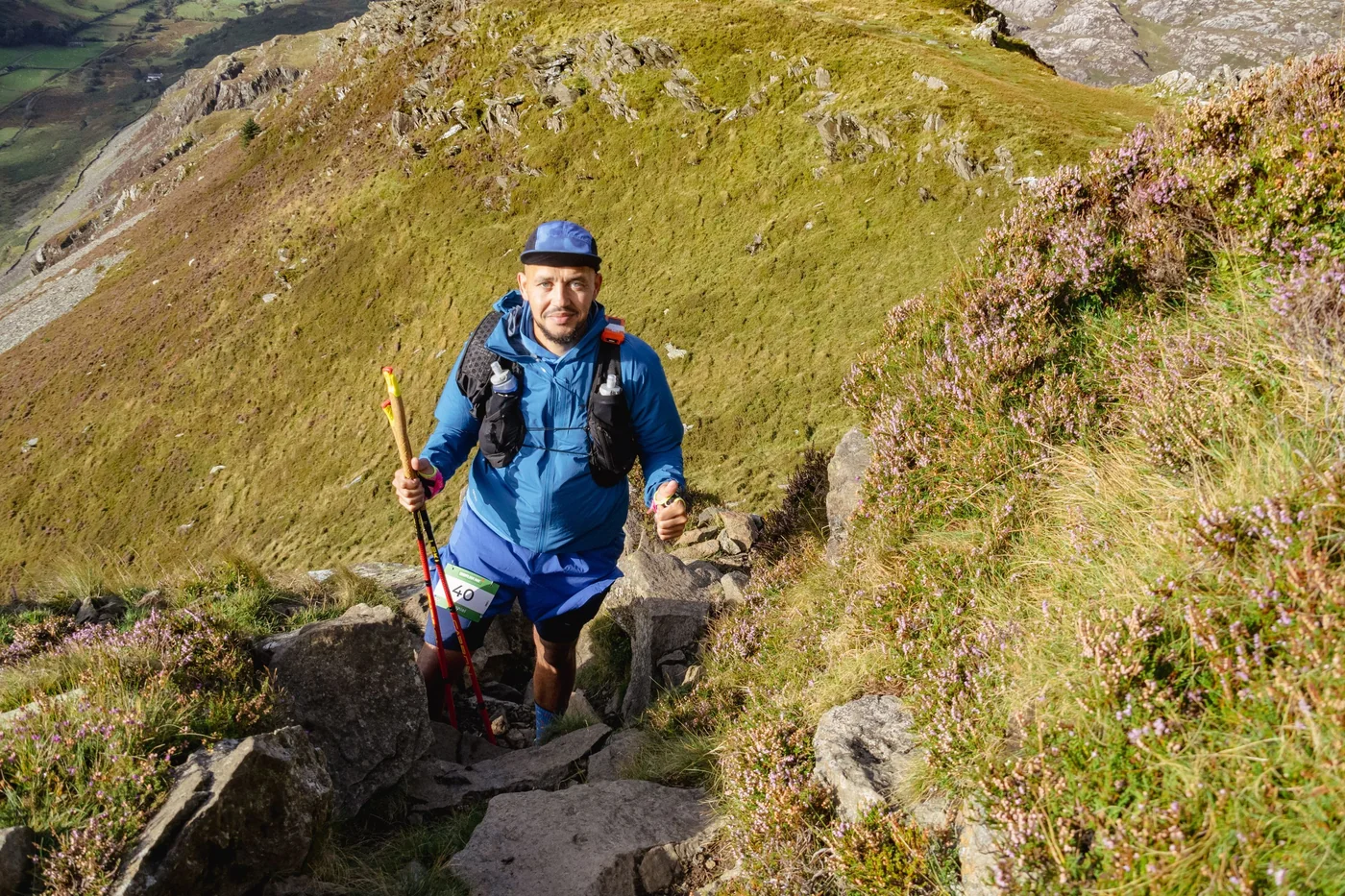
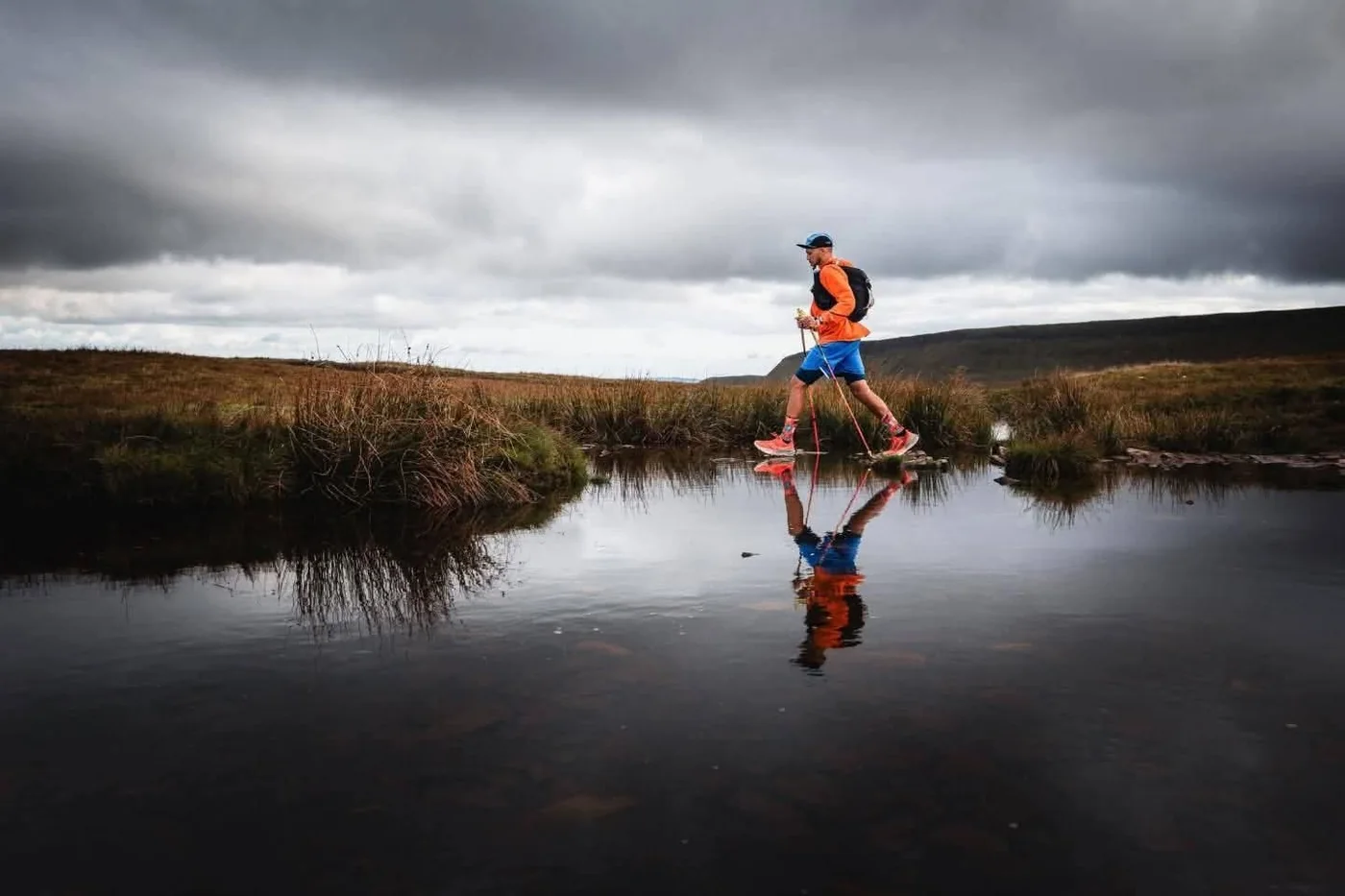
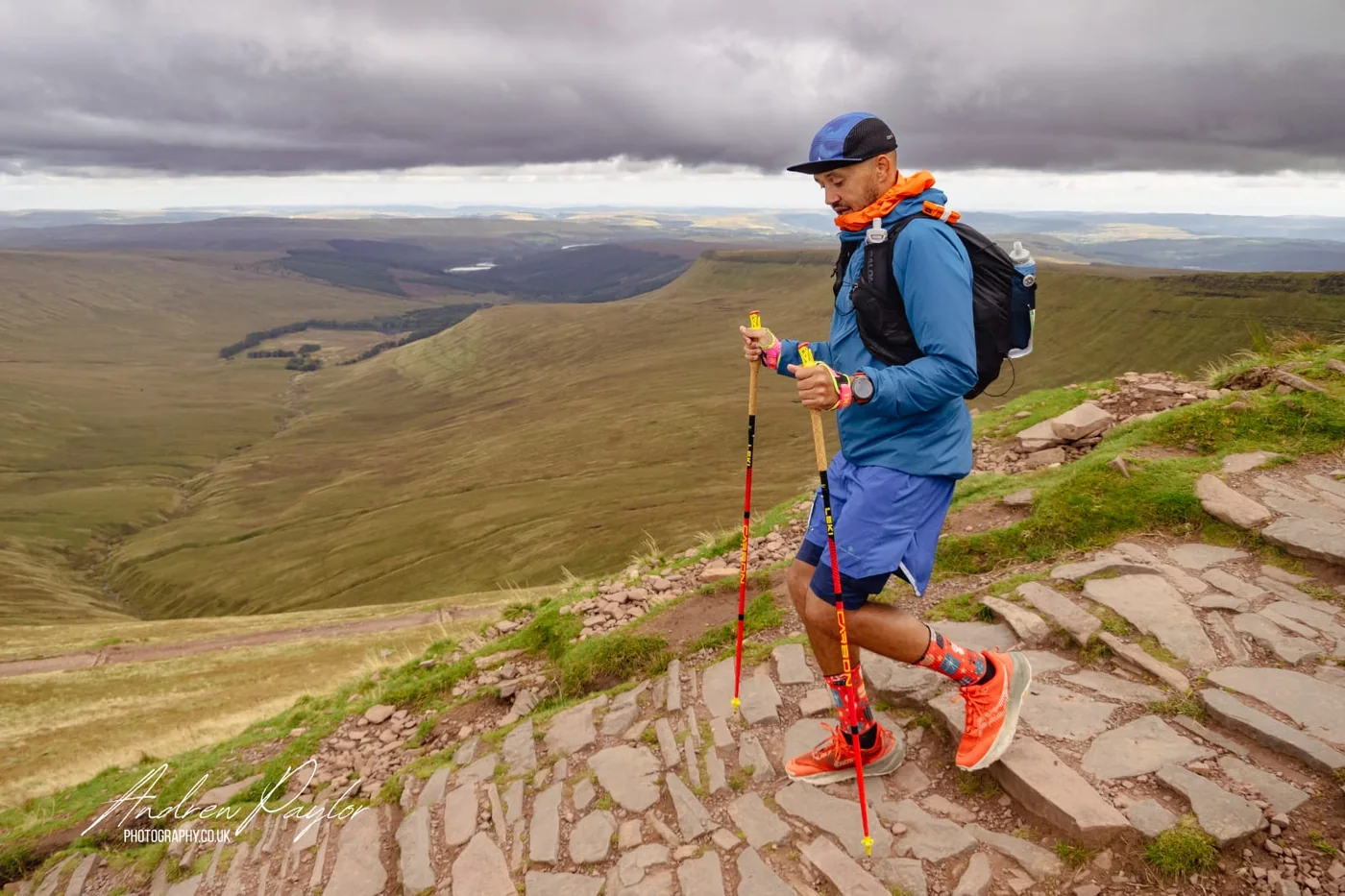
By the last day, 20.7 miles in 8:36:03, the list had grown: the left Achilles, the blister at the back of it, blisters on the outside of both big toes, and a right calf that started complaining on the way to Cardiff.
“At that stage I wasn’t thinking about pace or trying to run everything,” he said. “I was concentrating on the next section of trail and simply continuing to move.”
How you train for Welsh mountains from Southend
Southend is one of the flatter places in England to be preparing for 27,921ft of climbing, and Mr Dublin says he had to make do with what is here.
“I used Hadleigh Downs a lot, along with the trails and hills around Hadleigh Castle,” he said. “I’ve also used the Leigh Steps and other local inclines to get some elevation into my training. I also focused heavily on time on feet rather than simply chasing mileage. For a multi-day event like Dragon’s Back, I knew there would be a huge amount of walking as well as running. You need to be comfortable moving for hours when you’re already tired.
“I knew I couldn’t recreate Welsh mountains in Southend. The aim was to prepare my body and mind for spending long periods moving, climbing whatever hills we could find and being comfortable with fatigue.”
He has run with Flyers Southend since 2018.
“Running can look like an individual sport because you’re the person actually running, but there’s a huge community behind it,” he said. “The encouragement from Flyers around Dragon’s Back meant a lot to me. People knew about the challenge, they knew I’d been dealing with the Achilles and they followed what I was doing. Knowing people back home were supporting you makes a real difference when you’re somewhere in the Welsh mountains having a difficult day.
“I started my running journey with Flyers, so there’s a real sense of coming full circle in being able to represent the club while taking on something like Dragon’s Back.”
“Don’t assume the trails aren’t for you”
Mr Dublin is also part of Black Trail Runners, a charity created in 2020 that works to increase the inclusion, participation and representation of Black people and People of Colour in trail running, and which runs free community trail sessions led by qualified leaders around the country.
Asked what he would say to a Black or Asian reader in Southend who has never run off road, he did not hedge.
“Representation matters. Sometimes you don’t realise something is possible or that it’s for you until you see somebody who looks like you doing it,” he said. “I’d say to any Black or Asian person in Southend who has never tried trail running: don’t assume the trails aren’t for you.
“You don’t need to be an experienced mountain runner. You don’t need the most expensive equipment. You don’t need to know everything before you start. You can start by walking a trail. You can go with a friend. You can join a running group. You can gradually build your confidence.
“I’ve found that trail running is about much more than running. It’s about adventure, community and discovering what you’re capable of. I’d love to see more people from Southend who might never have considered trail running give it a go.”
He told us after this article was first published that he hopes to bring some of that to Essex. In the coming weeks he will talk to Black Trail Runners about setting up free community trail sessions locally, with Hadleigh Downs, Hadleigh Castle, Great Wakering and possibly Cherry Orchard Country Park in mind. Nothing has been confirmed yet. He is a qualified Leadership in Running Fitness run leader through England Athletics, and says it is something he would like to help get off the ground.
He coaches in Southend and works as a physical activity specialist with Everyone Health across the area, and he was asked what he tells a client who has decided the thing they planned is off.
“Don’t underestimate what’s still possible. But I also mean that realistically. I’m not someone who believes you should blindly push through everything regardless of what your body is telling you,” he said. “Sometimes the original plan doesn’t work. That doesn’t mean you’ve failed. You might have to change the route. You might have to slow down. You might have to take longer. You might have to adapt the goal. But don’t decide something is impossible simply because it isn’t going to happen exactly the way you first imagined.”
Next up: 100 miles in one go, on 3 October
Ten days from now he starts again. On Saturday 3 October he takes on the UK Ultra South Downs 100, a single 100-mile loop from Plumpton Racecourse in East Sussex with about 12,000ft of climbing, starting at 6am on the Saturday and closing at 4pm on the Sunday, a cut-off of 34 hours (UK Ultra).
He has tried the distance before inside 24-hour events and come close without getting there.
“Technically, Dragon’s Back meant I covered more than 100 miles, completing 112.22 miles over six days, but this will be different,” he said. “This is my chance to complete 100 miles as one continuous race, from start to finish, within the 34-hour time limit. I’ve had enough time to recover from Dragon’s Back and, at the moment, I’m feeling fresh and ready to give it everything I’ve got.”
What it means for you
- If you want to try a trail without committing to anything, Black Trail Runners lists its free community runs, which it says are led by qualified leaders and open to all paces, on its community trail runs page. The bookings list shows nothing in Essex at present: the nearest to Southend are the London runs, three of them between 3 and 25 October.
- If you want a club in Southend, Flyers Southend describes itself as runners of all ages and abilities and says new members are welcome irrespective of ability. Sessions are booked through its RunTogether group page.
- The hills Mr Dublin used are on our doorstep. Hadleigh Downs, the trails around Hadleigh Castle and the steps at Leigh are all inside a short train ride from Southend, and they are what he trained on. Our guide to things to do in Southend covers getting out around the estuary.
- Watching the South Downs 100 on 3 October is possible from Plumpton Racecourse, where the race both starts and finishes.
If you are running something for Southend, or your club has a result worth reporting, send it to us at hello@southendtoday.co.uk and we will write it up.
Have your say